

Birdwatching and Nature Photography Tours in Turkey
Private trips for birders and nature photographers, timed to the migration and planned around the light: flamingos on the Sultan Marshes, wallcreepers in the Aladağlar, storks over the Bosphorus and dawn over Cappadocia.
- Length
- Sample trip: 5 days, 4 nights
- Style
- Private, with your own guide and driver
- Starts and ends
- Kayseri or Nevşehir airport (Cappadocia)
- Best time
- April to June, September to October
- Cappadociayour base, 4 nights
- Sultan Marshesday trip
- Aladağlarday trip
Some 450 bird species have been recorded in Turkey. Millions of birds cross the country twice a year between Europe, Asia and Africa, and its wetlands, steppes and mountains hold species that are hard to find anywhere else in Europe, from Dalmatian pelicans to wallcreepers and Caucasian black grouse.
We plan private trips for people who get up before dawn on purpose: birders with a target list, photographers who need the right light, and anyone who simply loves wild places. You get your own vehicle and driver, a guide who knows where to look (and when to stay quiet), hotels chosen for early starts, and days built around migration, weather and golden hour instead of a fixed timetable.
The Sultan Marshes: flamingos below a volcano
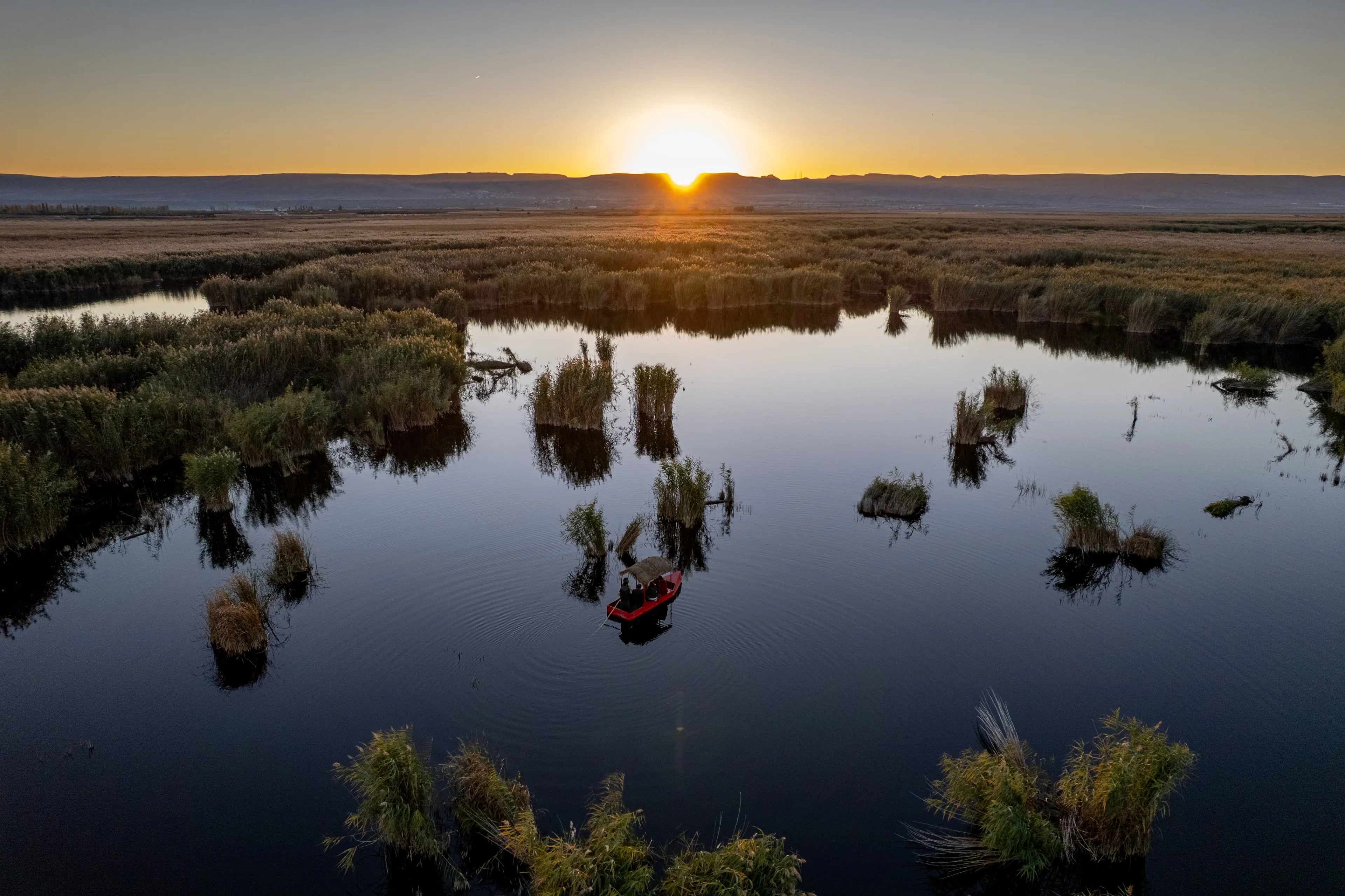
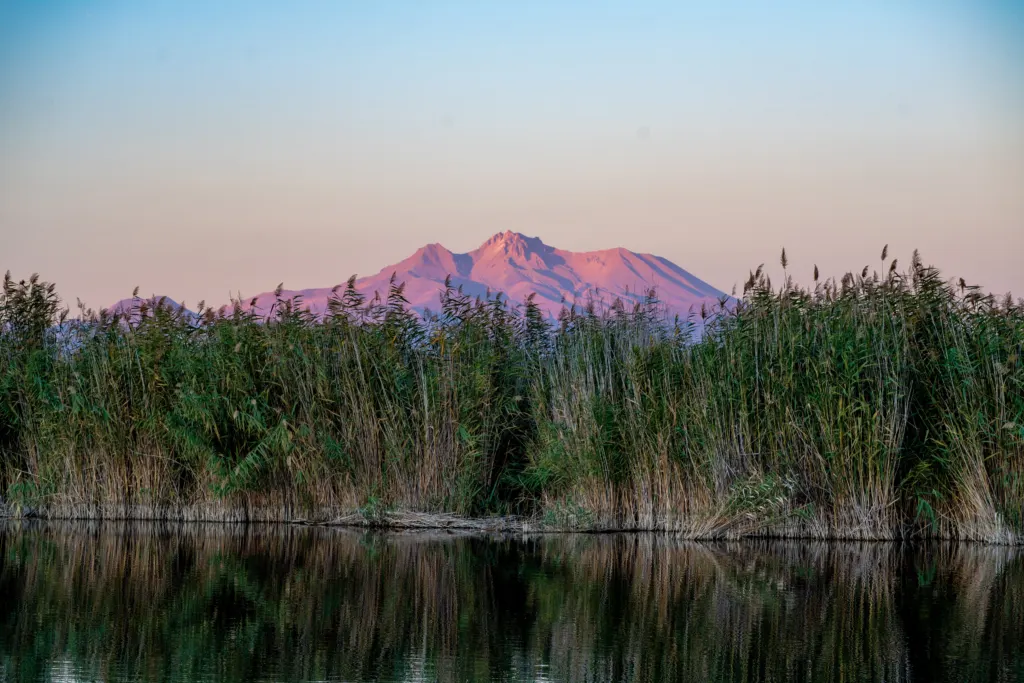
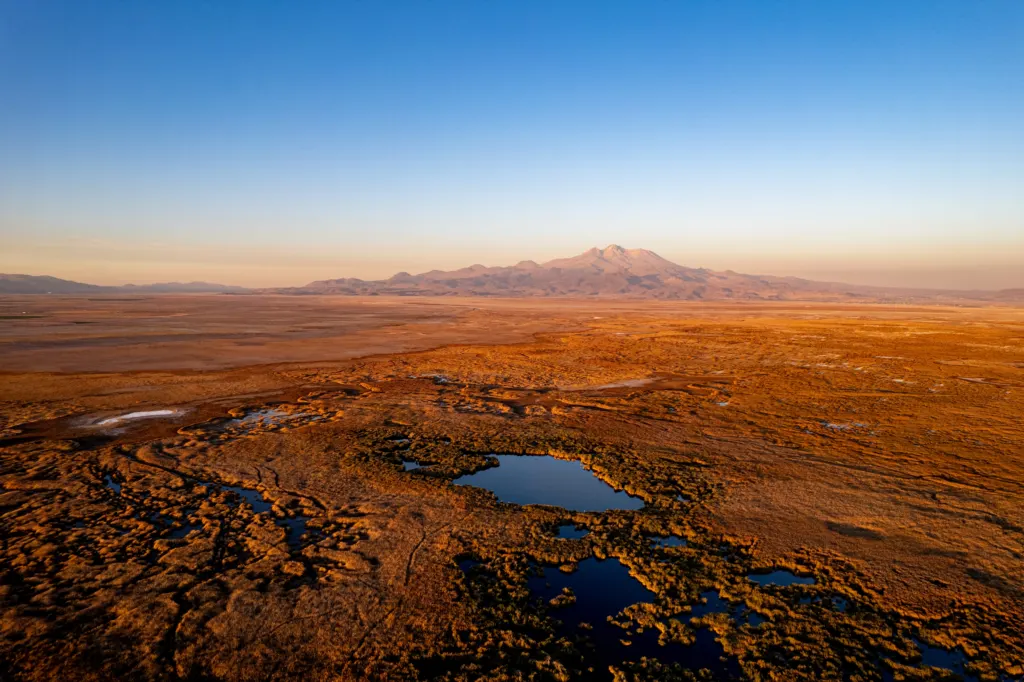
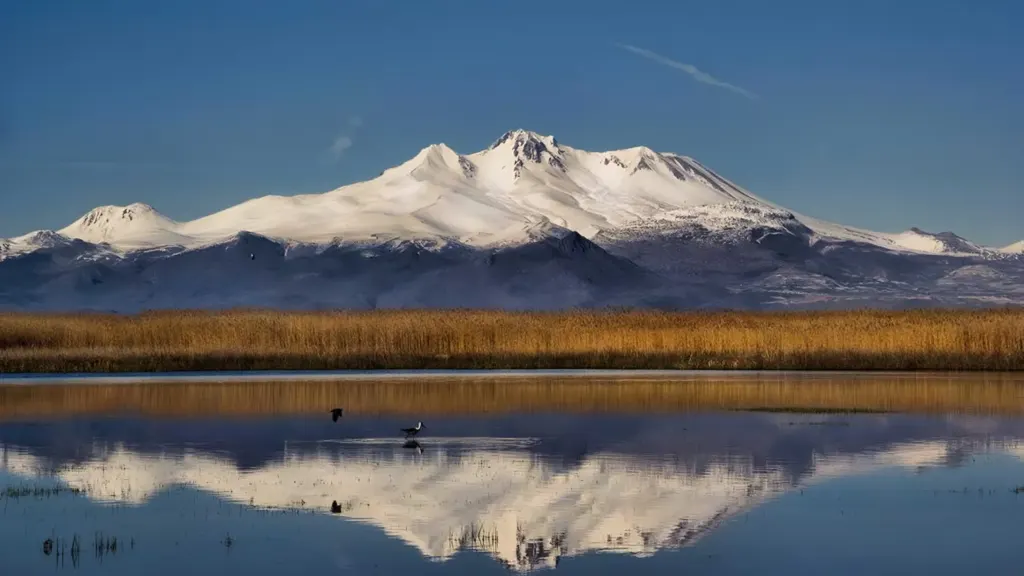
The Sultan Marshes (Sultan Sazlığı) are one of Turkey’s most important wetlands for birds: a national park and a Ramsar site in a closed basin south of Kayseri, about an hour and a half by road from our office in Ürgüp. Freshwater reed beds, salt lakes and wet meadows spread out at over 1,000 meters, with the snowy cone of Mount Erciyes (3,917 m) on the horizon.
Around 300 bird species have been recorded here. In spring and early summer look for greater flamingos, which breed here in good years, great white pelicans, glossy ibises, spoonbills, purple and night herons, and ruddy shelducks almost everywhere; the endangered white-headed duck is one of the prizes. The reeds are loud with warblers in spring, and in autumn cranes and waders pass through on migration.
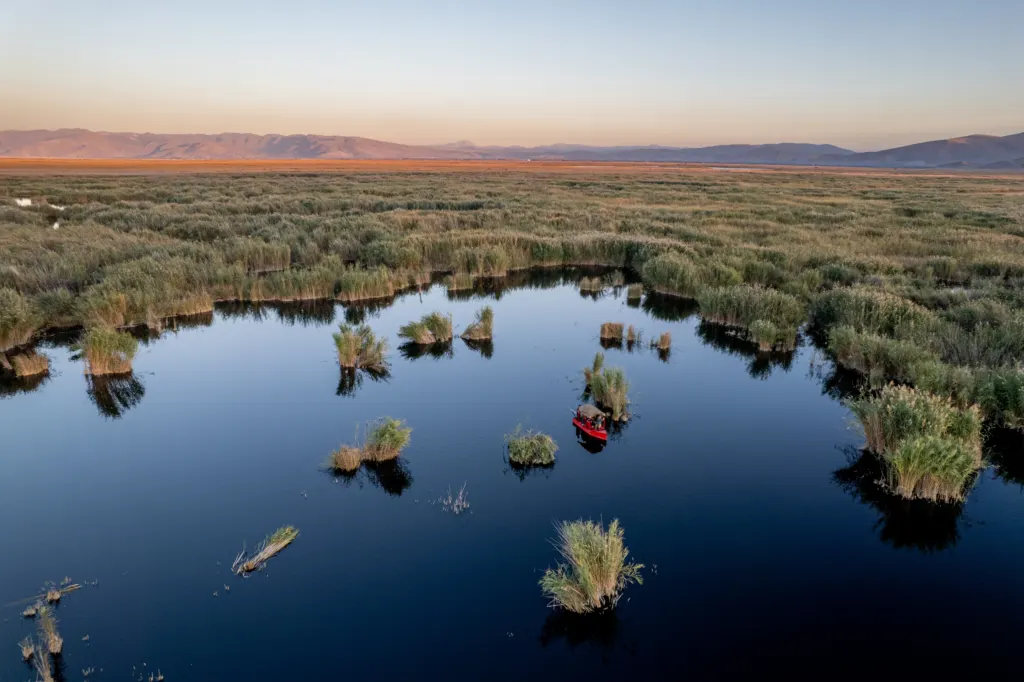
For photographers the marshes are generous: low sun across open water, mist and reflections on still mornings, flamingos lined up in front of Erciyes, and small boats that take you quietly along the channels between the reeds, at water level. An observation tower near the visitor center looks out over the whole basin, and the evening light is worth staying for.
Water levels change from year to year, and dry summers can shrink the open water, so we check conditions with local contacts before we plan your days.
Beyond the marshes: where else we take birders and photographers
Cappadocia’s valleys
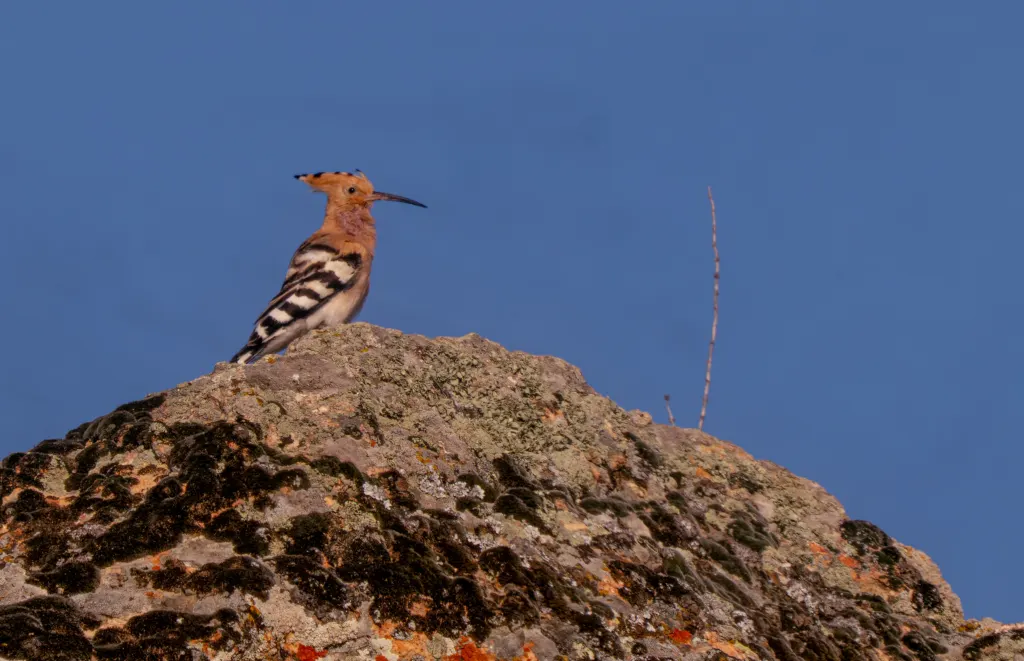
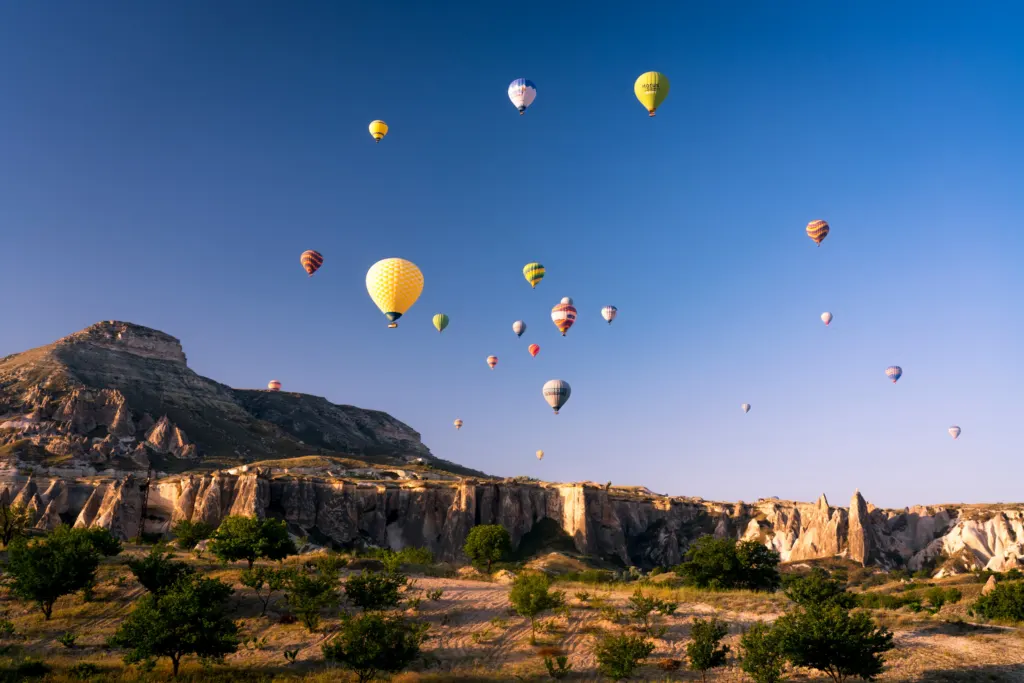
Our home ground. Long-legged buzzards hunt over the tuff cliffs, western rock nuthatches nest in the rocks, and hoopoes and bee-eaters work the orchards of the valleys around Pigeon Valley and Uçhisar. At sunrise the hot-air balloons lift over the valleys, one of the most photographed landscapes on earth, and we know the viewpoints away from the crowds.
Lake Tuz and the Aladağlar mountains
West of Cappadocia, Lake Tuz, Turkey’s great salt lake, draws greater flamingos in huge numbers in wet years. Two hours south, the limestone peaks of the Aladağlar around Demirkazık are the classic site for wallcreepers, Caspian snowcocks, red-fronted serins and alpine choughs. The snowcocks call at dawn, so this one starts early.
The Bosphorus in autumn
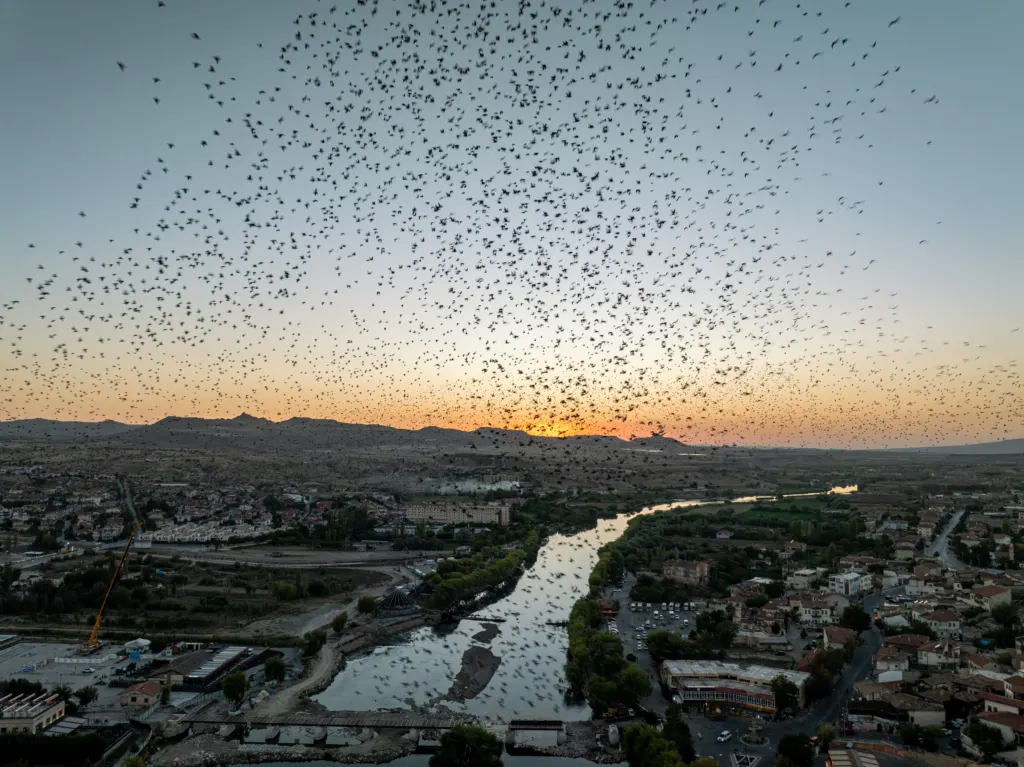
From late August to early October, tens of thousands of storks and birds of prey funnel over Istanbul on their way south. The hills of Çamlıca and Sarıyer above the Bosphorus make a morning of raptor watching easy to fit into an Istanbul stay.
The Black Sea mountains
The coast around Artvin sees one of the largest raptor migrations in the world every autumn, and the high meadows of the Kaçkar Mountains above the Black Sea are home to Caucasian black grouse and Caspian snowcocks, among summer villages and rhododendrons.
The southeast
Birecik on the Euphrates protects Turkey’s last northern bald ibises in a breeding station, and its gardens and cliffs draw birders for species such as the pallid scops owl and the Iraq babbler. It combines well with Şanlıurfa and Göbeklitepe.
Deltas and bird sanctuaries
The Göksu Delta on the Mediterranean holds Turkey’s record for the most bird species seen in one area. Lake Manyas (Kuşcenneti) near Bandırma, where Dalmatian pelicans breed, the Gediz Delta near İzmir and the Kızılırmak Delta on the Black Sea are easy to add to a longer journey. There is more in our guide to the migratory birds of Turkey.
How we plan a birding or photography trip
- Timed to nature. Migration windows, breeding seasons, sunrise and sunset times and the weather decide the days, not a fixed timetable.
- Your own vehicle and driver, with room for tripods, long lenses and a scope, and nobody sighing when you ask to stop for a shrike.
- Early starts, late finishes. Hotels close to the sites or cave hotels in Cappadocia, packed breakfasts, and dinners that wait for the blue hour.
- Local knowledge. Boatmen on the marshes, guides who know the tracks, and straight answers on where you can fly a drone.
- Respect for the birds. We keep our distance from nests and roosts, especially in the breeding season, and follow the rules of each park.
- Easy to combine. Add a few days in the field to a Cappadocia, Istanbul or southeast journey, or build the whole trip around your target list.
The best time for birdwatching in Turkey
- April to June: spring migration, displays and breeding colonies. The best all-round season, with flamingos and pelicans on the Sultan Marshes.
- July and August: young birds and long golden evenings. The lowlands are hot; the mountains are at their best.
- Late August to October: the autumn migration of storks, raptors, cranes and waders over the Bosphorus, the Black Sea coast and the wetlands.
- November to March: wintering ducks and geese on the deltas, and snow on Mount Erciyes and in the valleys of Cappadocia for landscape photographers.
A sample trip: five days from Cappadocia
- Day 1. Arrive at Kayseri or Nevşehir airport and settle into a cave hotel in Ürgüp. A late-afternoon walk in the Red Valley for bee-eaters, hoopoes and the first golden light.
- Day 2. Sunrise with the balloons, from the ground or from a basket. Pigeon Valley and Uçhisar for rock nuthatches and long-legged buzzards, a slow lunch, then a sunset viewpoint of your choice.
- Day 3. The Sultan Marshes: dawn at the observation tower, a boat trip through the reeds, flamingos and pelicans, a picnic in the field and sunset with Mount Erciyes.
- Day 4. The Aladağlar: an early start (or a night closer to the mountains) for wallcreepers, snowcocks and red-fronted serins around Demirkazık, or Lake Tuz for flamingos in season.
- Day 5. A last morning in the field and your transfer to the airport, or on to Istanbul, the coast or the southeast.
Every trip is private and tailor-made. Send us your dates, your target species or the shots you’re after, and we’ll plan the days around them.
Questions birders and photographers ask us
When is the best time for birdwatching at the Sultan Marshes?
April to June is the best all-round season, with flamingos, pelicans, herons and ibises on the water and warblers singing in the reeds. September and October bring migrating cranes and waders. Water levels vary from year to year, so we check conditions before we plan your days.
How far are the Sultan Marshes from Cappadocia?
About an hour and a half by road from Ürgüp, so they make an easy day trip from a cave hotel in Cappadocia: a dawn start, a boat trip through the reeds, and back after sunset. The nearest airports are Kayseri and Nevşehir.
Which birds can I see at the Sultan Marshes?
Around 300 species have been recorded. Highlights include greater flamingos, great white pelicans, glossy ibises, spoonbills, purple and night herons and ruddy shelducks, and with luck the endangered white-headed duck. Common cranes and many waders pass through in autumn.
Do you arrange private birding guides?
Yes. Every trip is private, with your own vehicle and driver and a guide chosen for your interests. For birders and photographers we work with local guides who know the sites and the species; send us your target list and we’ll plan around it.
Where else in Turkey is good for birdwatching?
The Bosphorus in autumn for storks and raptors, the Aladağlar mountains for wallcreepers and Caspian snowcocks, the Kaçkar Mountains for Caucasian black grouse, Birecik for the northern bald ibis, Lake Tuz for flamingos, and the Göksu, Gediz and Kızılırmak deltas.
Can I fly a drone at the Sultan Marshes?
The marshes are a national park, and drone flights in Turkey’s national parks need permission. Tell us in advance and we’ll tell you what’s possible. The boats and the observation tower give great angles without one.
What should nature photographers bring?
A long lens (400 mm or more) for birds, a wide lens for Erciyes and the reeds, a polarizing filter for the water, and warm layers: mornings at 1,000 meters are cold, even in spring.
Can I combine birdwatching with a Cappadocia or Istanbul tour?
Yes, and most of our guests do. Add a few days in the field to a Cappadocia, Istanbul or southeast journey. In autumn, the stork and raptor migration over the Bosphorus fits neatly into an Istanbul stay.
You might also like
8 days, 7 nights
In Touch with Nature
8 days, 7 nights
Hiking in Cappadocia
Private birding and photography trips
Send us your target list
Your dates, the species or shots you’re after, and who is traveling are enough to start. Your advisor replies within 24 hours with a plan built around the birds and the light.